
Your grievance finally files itself.
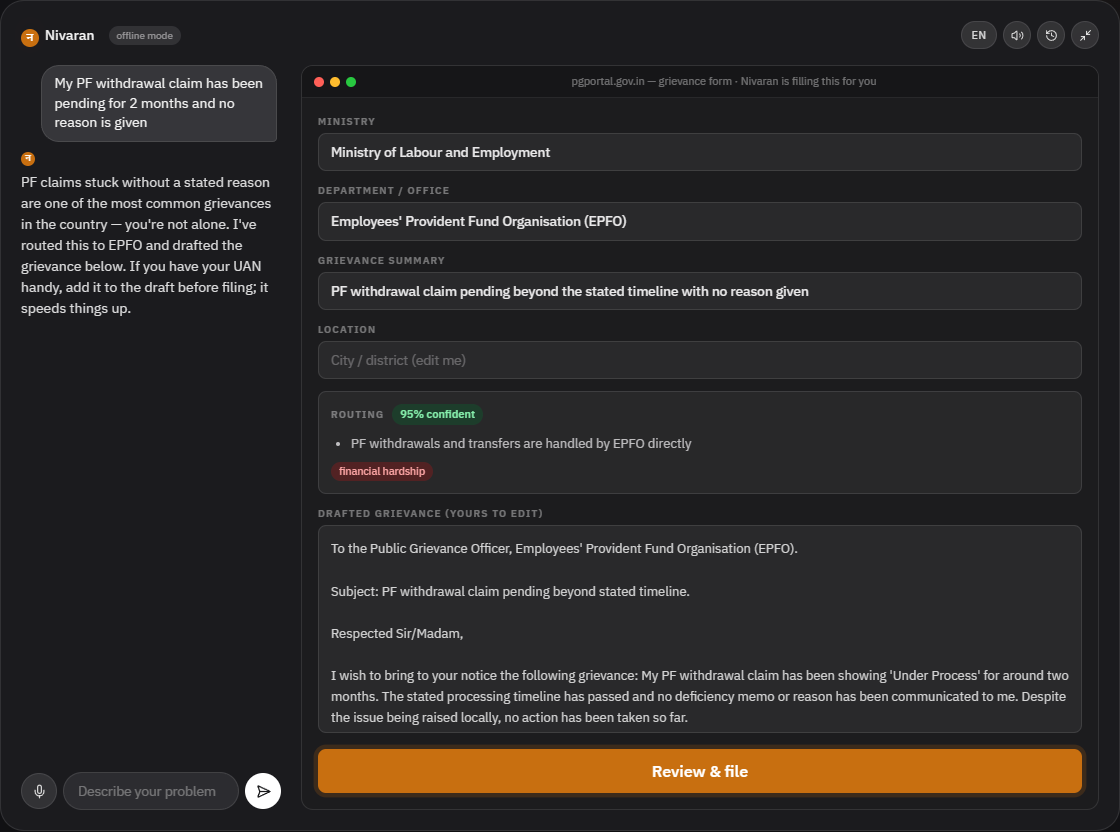
Filing a complaint on CPGRAMS means guessing the right ministry from a giant category tree and writing like a bureaucrat. Nivaran replaces all of it with a conversation — Hindi, English, ya mixed. You talk. The system routes, drafts, files, and tracks.
Judges: citizen@demo.in / nivaran123 · every account, department, and status is mock · the agent is real
Crores of grievances
flow through CPGRAMS — filed by citizens who must guess the right ministry themselves.
21 days
is the official redressal window. Most citizens never see the clock, or learn they can appeal.
One wrong guess
in the category tree and a complaint bounces between departments for weeks.
Three minutes, start to filed
Say it like you'd tell a friend
"Mere mohalle mein do hafte se paani nahi aa raha." Speak or type, Hindi or English. The agent asks at most one clarifying question — and answers you out loud.
Watch the form fill itself
Nivaran picks the responsible ministry and department, shows its confidence and its reasons, and drafts the formal grievance from your words. The paperwork happens in front of you.
Approve, file, and actually track
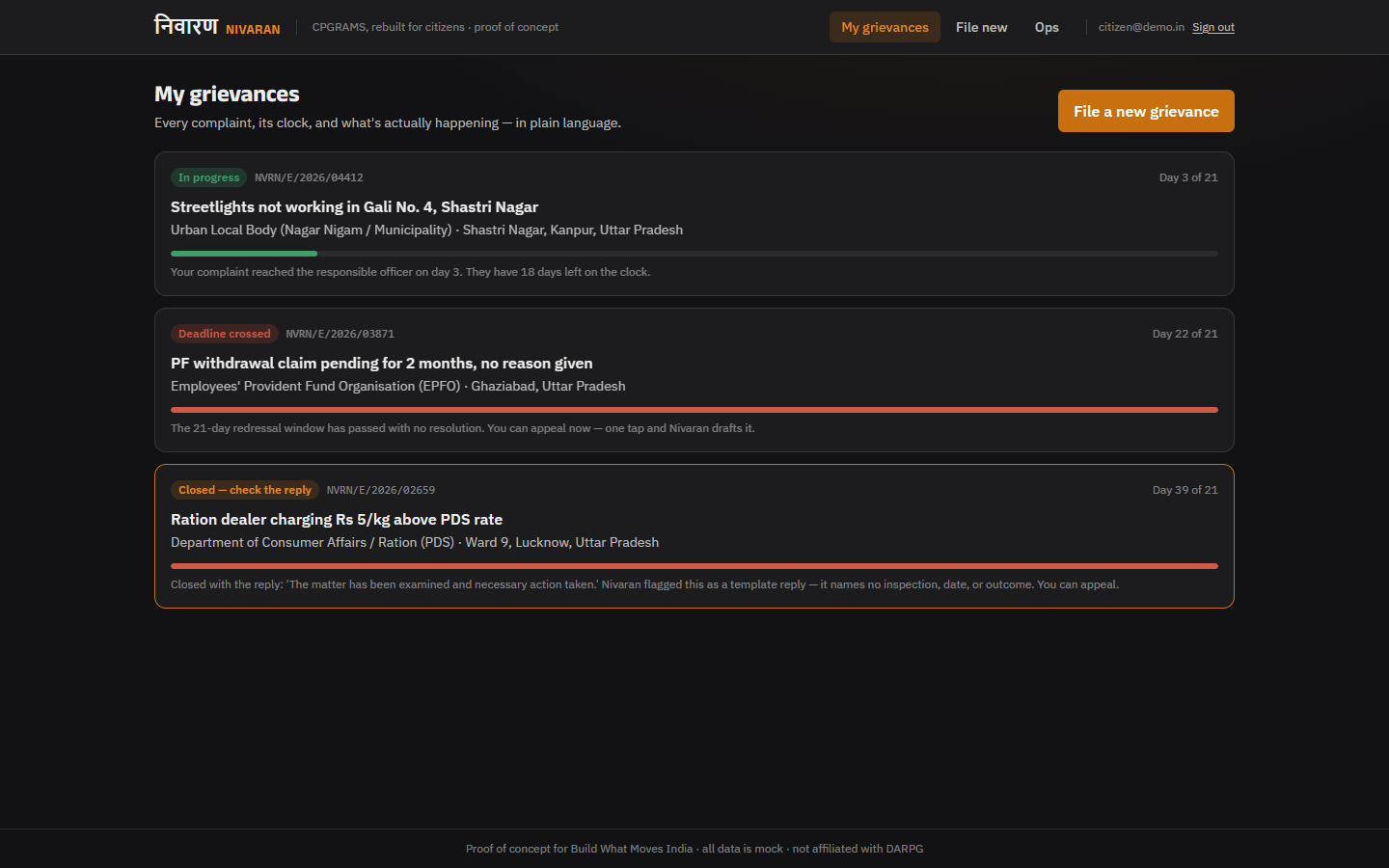
Nothing files without your sign-off. Then tracking speaks human — "your complaint reached the responsible officer on day 3" — with the 21-day clock always visible and a one-tap appeal when it runs out.
Routing is the agent's job
Departments only receive complaints they can act on
The single biggest CPGRAMS failure is misrouting: a stuck PF claim — is that Labour Ministry or EPFO? A dead water line — municipality or Jal Nigam? Citizens shouldn't have to know. Nivaran classifies every grievance, shows the confidence and reasoning on screen, and files it with the office that owns the problem. Fewer bounces, faster redressal, and a paper trail that says why.
- The 21-day clock on every case, with the appeal drafted the moment it breaches
- Template-reply closures get flagged — "necessary action taken" is not redressal
Always current
It never quotes last year's rules
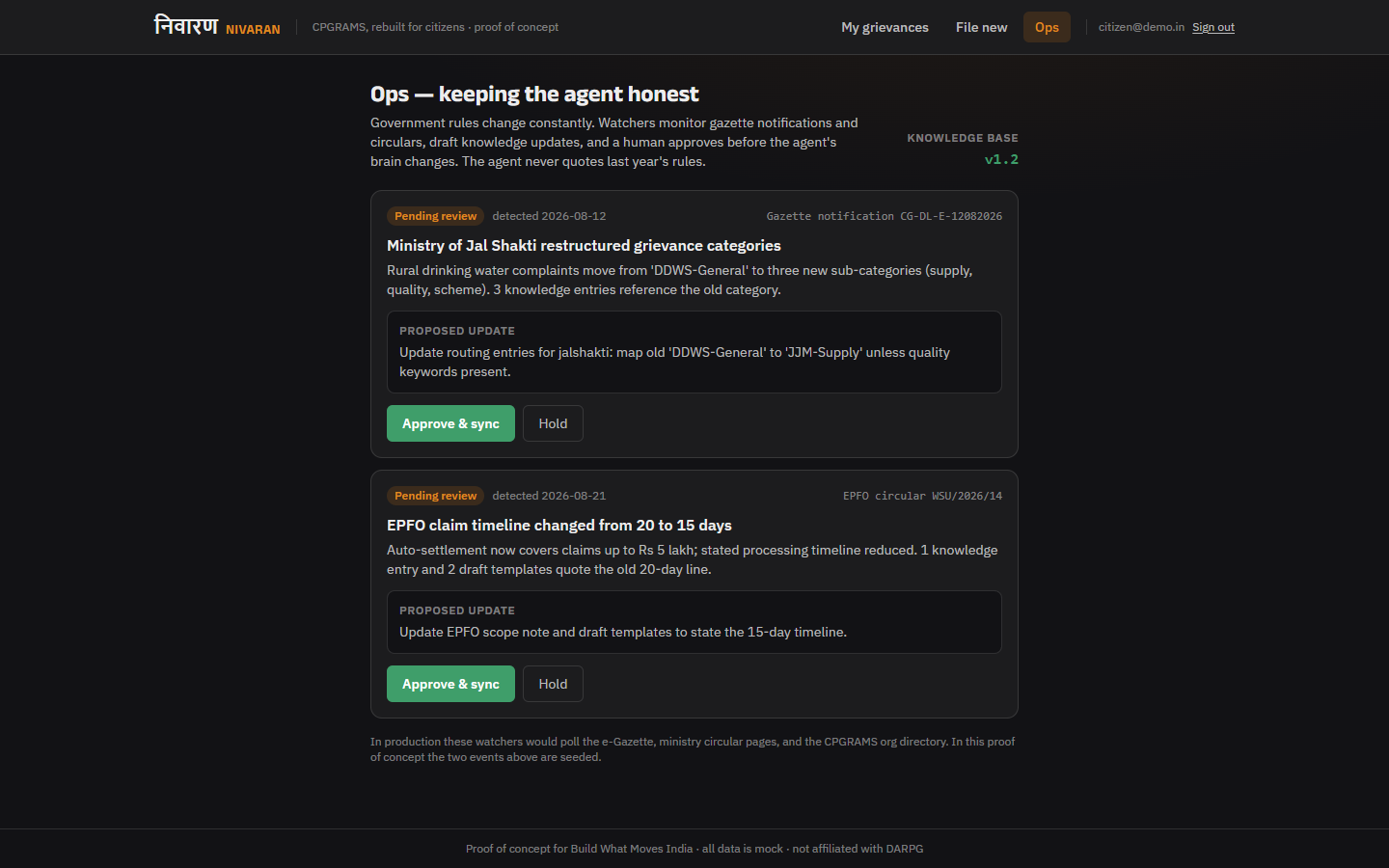
Government chatbots fail the day a circular changes a timeline. Nivaran's knowledge runs through a watch-draft-review-sync pipeline: watchers monitor gazette notifications and department circulars, draft the knowledge update, and a human approves it before the agent's brain changes. The same human-in-the-loop rule protects citizens — nothing legal ever files without an explicit sign-off.
When EPFO cut its claim timeline from 20 days to 15, one approval updated every answer and draft the agent gives. That's the whole point.
File your first grievance in three minutes
The button below opens the same agent that lives on the portal. Say your problem. Watch the government form fill itself.